Blog post
You approved what your AI would do. Nobody approved what it would find.
Access is granted once, when a job starts. An AI agent chooses its own next move, so what it reaches for nine steps in was never in front of whoever signed it off.
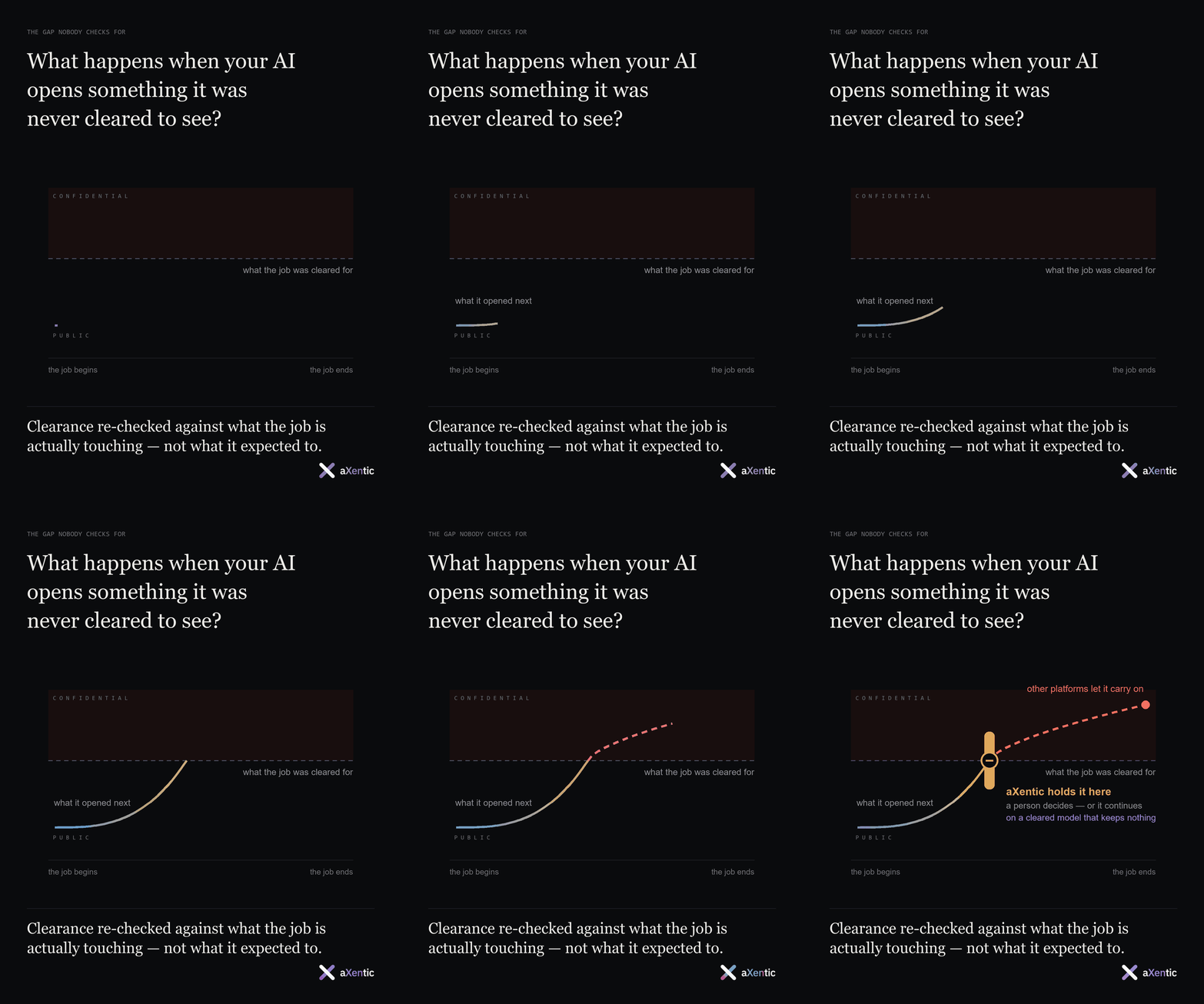
No one designed that gap. It’s what happens when you give autonomy to a system whose permissions assume obedience.
Access is granted once, when a job starts — which worked when software only did what it was told. An AI agent chooses its own next move: which system to search, which record to pull. So what it reaches for nine steps in was never in front of whoever signed it off.
An agent tidying supplier contracts reaches a folder holding an unannounced renegotiation, lifts one line into a summary, and sends it to six people.
Nothing went wrong from where it sits. It was asked to summarise contracts, and it did. That is the shape of most of these. Not a breach. A job that finished successfully.
We built aXentic for that moment — so it becomes a decision someone makes, not an incident someone reports.
Not by asking a model whether the data is sensitive: that means sending it out before you know it needs protecting. It’s a rule, so you can show exactly why it stopped — months later, to someone who wasn’t there.
Worth asking what your own platform does there.